 EN
EN
 INA
INA
Faculty of Animal Husbandry, Udayana University Conducts International Community Service Program on “The Effect of Forage and Concentrate Quality on the Reproductive Performance of Ruminant Livestock” for Jimbaran Livestock Farmer Group
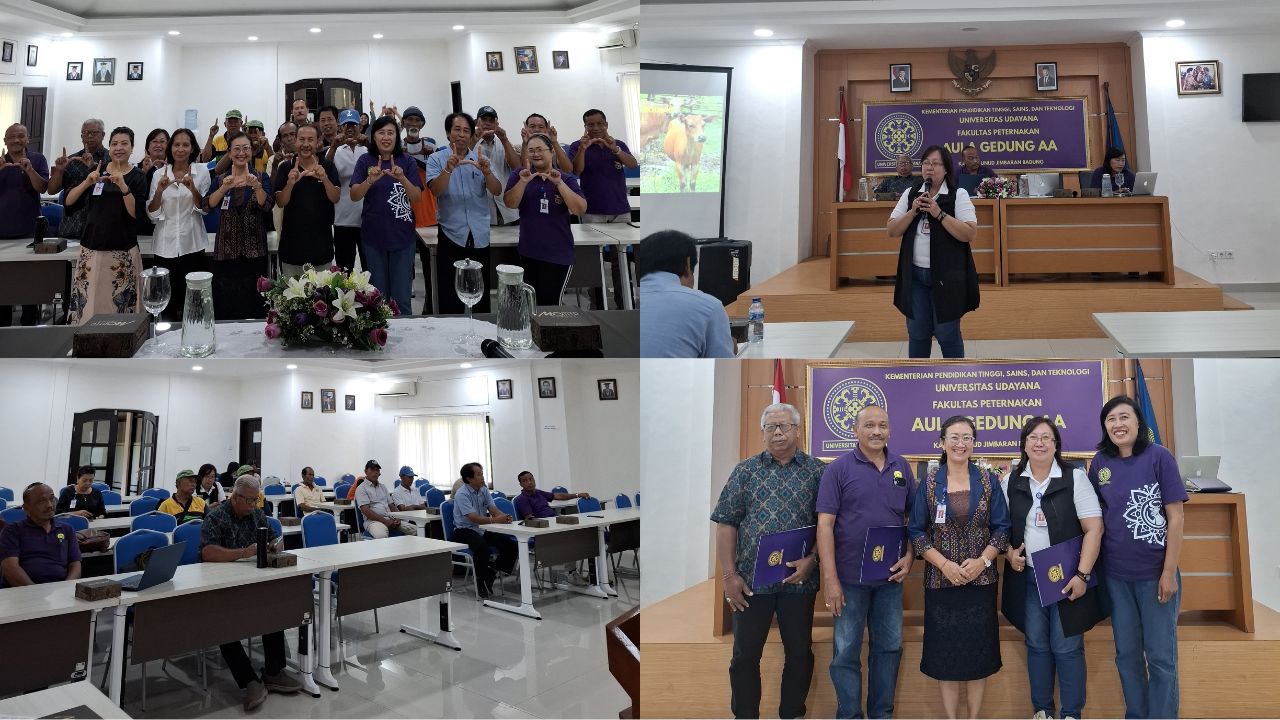
Bukit Jimbaran, 21 November 2025 — The Faculty of Animal Husbandry, Udayana University conducted an international community service program entitled “The Effect of Forage and Concentrate Quality on the Reproductive Performance of Ruminant Livestock” on Friday, 21 November 2025, at the Bukit Jimbaran Campus. The activity was attended by livestock farmer groups from the Jimbaran area, students, and livestock practitioners who share a common interest in improving ruminant productivity through enhanced nutrition and reproductive management.
The program commenced with a presentation on goat reproductive technologies delivered by Ir. Joana da Costa Freitas, L.Agp., M.Sc., IPM., from the Faculty of Agriculture, Universidade Nacional Timor Lorosa’e, Timor-Leste. She explained various technologies that can be applied to improve reproductive efficiency in goats, including estrus detection, estrus synchronization, and strategies to increase pregnancy rates. The session received positive responses from the Jimbaran livestock farmer group, many of whom are actively engaged in goat farming as a primary livestock enterprise.
The subsequent session was delivered by two speakers from the Faculty of Animal Husbandry, Udayana University, namely Prof. Dr. Ir. I Wayan Suarna, M.S., and Prof. Dr. Ir. I Gusti Lanang Oka Cakra, M.Si. They elaborated on the role of forage and concentrate quality in ruminant reproduction. Both emphasized the importance of adequate nutritional quality in influencing reproductive performance, including body condition, estrus efficiency, and pregnancy success rates. Farmers were provided with insights into the characteristics of high-quality forage, appropriate feed formulation, and nutritional management strategies during both dry and rainy seasons.
The third session was delivered by Dr. Ir. Ni Luh Gde Sumardani, S.Pt., M.Si., who discussed reproductive management in ruminant livestock. The material covered estrus detection, reproductive record-keeping, identification of common reproductive disorders, and management practices that support reproductive success. This session provided practical guidance that participants can directly implement in smallholder farming systems.
Throughout the activity, participants demonstrated high enthusiasm through interactive discussions and by sharing field experiences related to nutritional constraints, forage availability, and reproductive challenges encountered in their livestock operations. The speakers provided practical technical recommendations, enabling participants to obtain applicable solutions for direct implementation.
The community service program was successfully conducted and delivered tangible benefits to local farmers. The Faculty of Animal Husbandry, Udayana University remains committed to conducting similar initiatives as part of its Tri Dharma of Higher Education responsibilities, in order to support the development of more productive, efficient, and sustainable ruminant farming systems in Jimbaran and surrounding areas.
UDAYANA UNIVERSITY